Marbling at life
Some exhibitions stay with you for life. Such is the Dulwich Picture Gallery exhibition Tirza Garwood: Beyond Ravilious that I visited back in 2025. Frankly I went because a friend suggested it, and I like Ravilious and the Dulwich Picture Gallery. I knew nothing of Garwood or her ‘sophisticated naïve’ work.
Her oeuvre was rich and varied. First, I was captivated by her collaged paper constructions showing buildings and scenes, full of witty detail. But it was the second room that really blew me away: Garwood’s extraordinary marbled papers. I previously had a sense of marbling as mostly being stuffy and Victorian - stolid end papers to heavy books. But Garwood’s designs are sensitively coloured and lightly composed. I couldn’t get enough of them and left feeling visually reinvigorated, determined to find out more about marbling, perhaps trying my hand if I could.
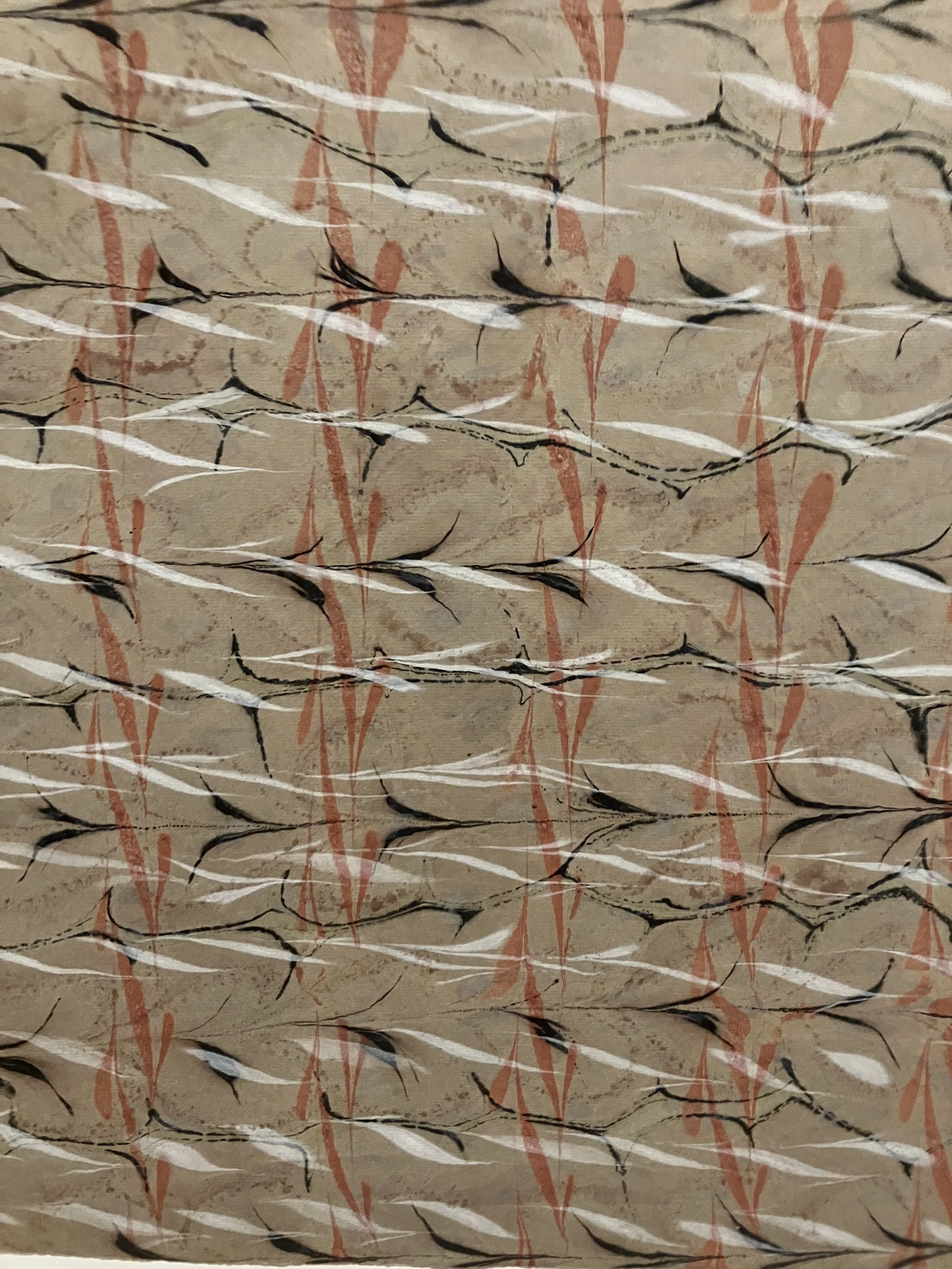
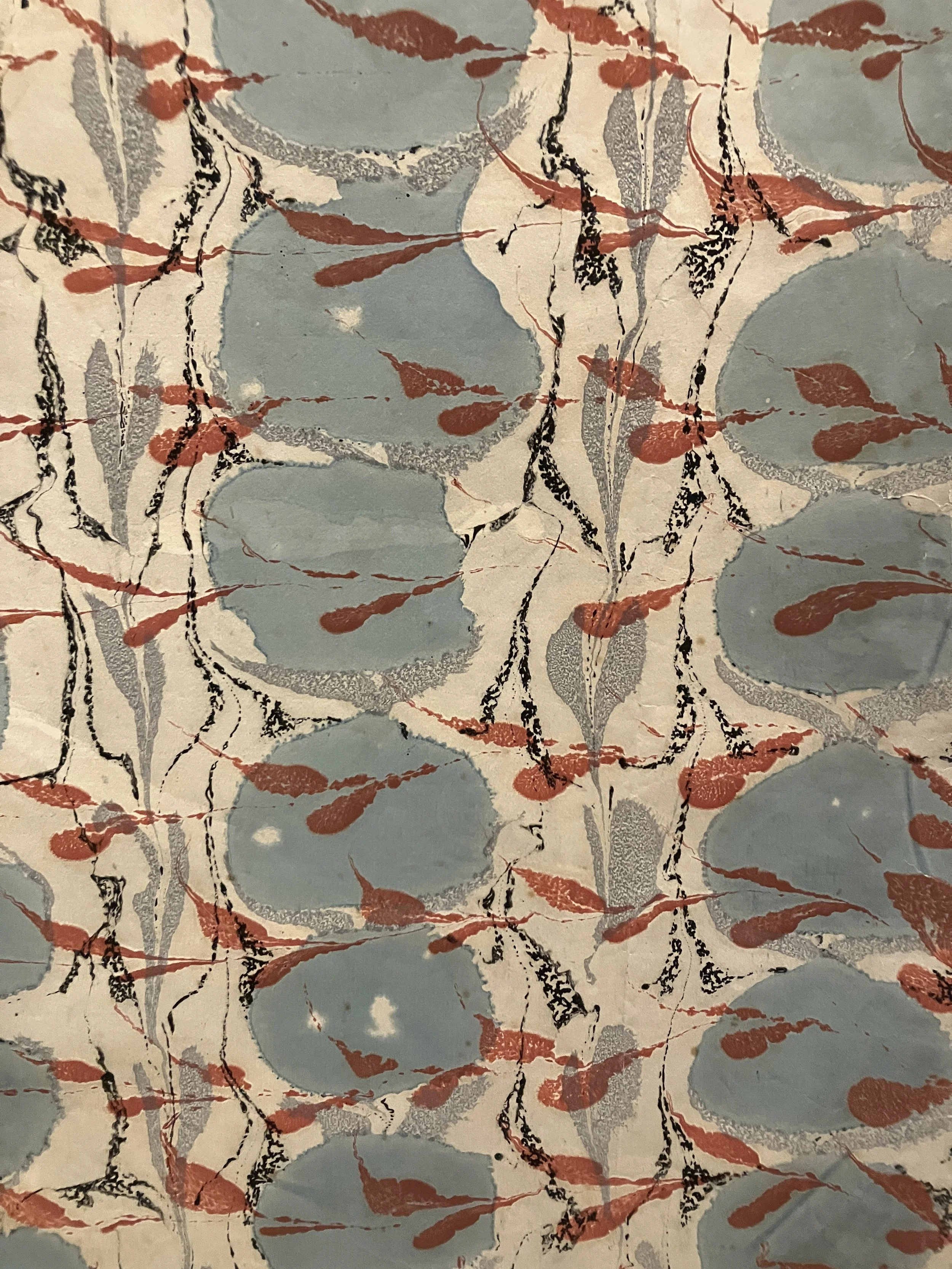
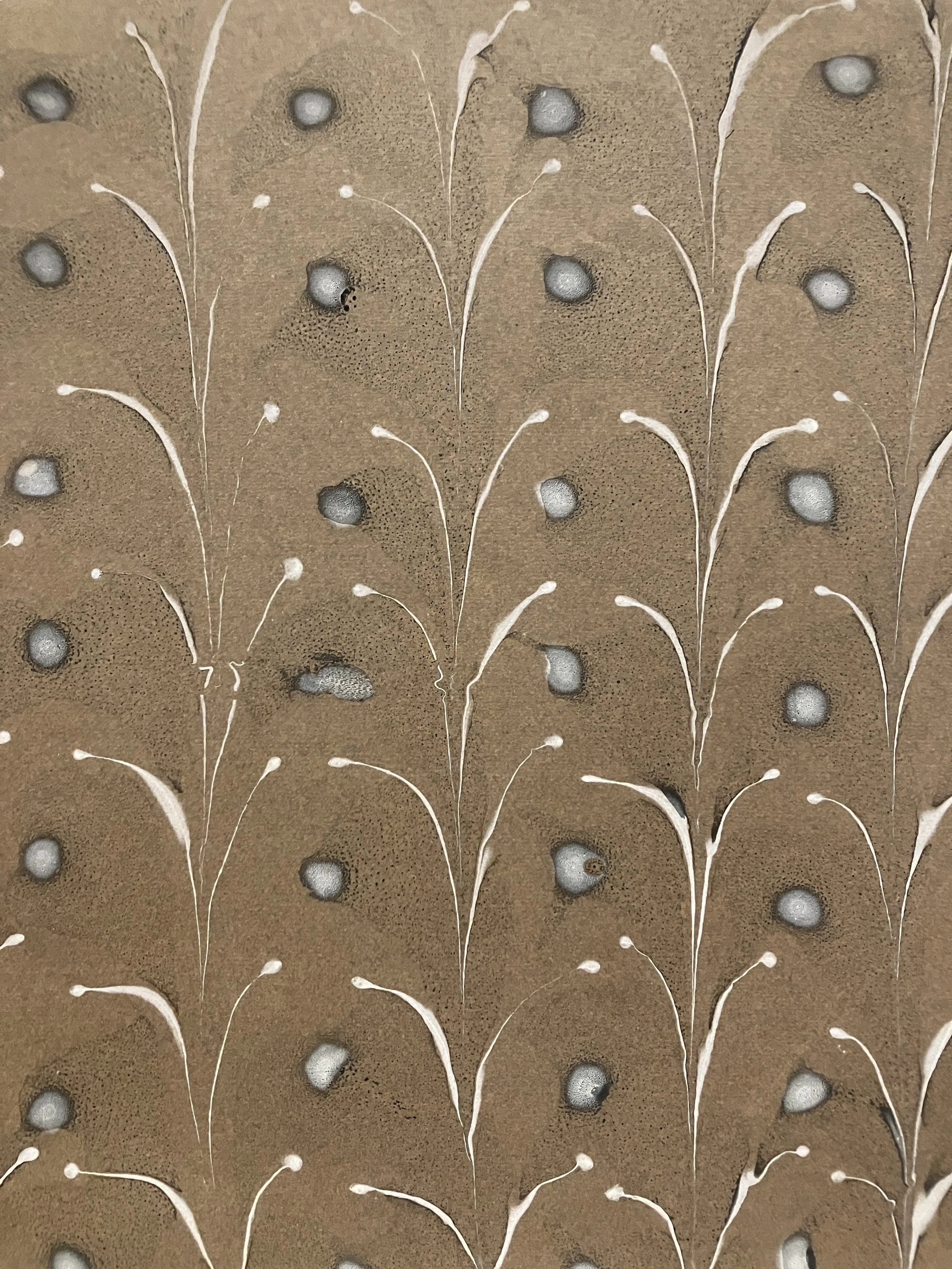
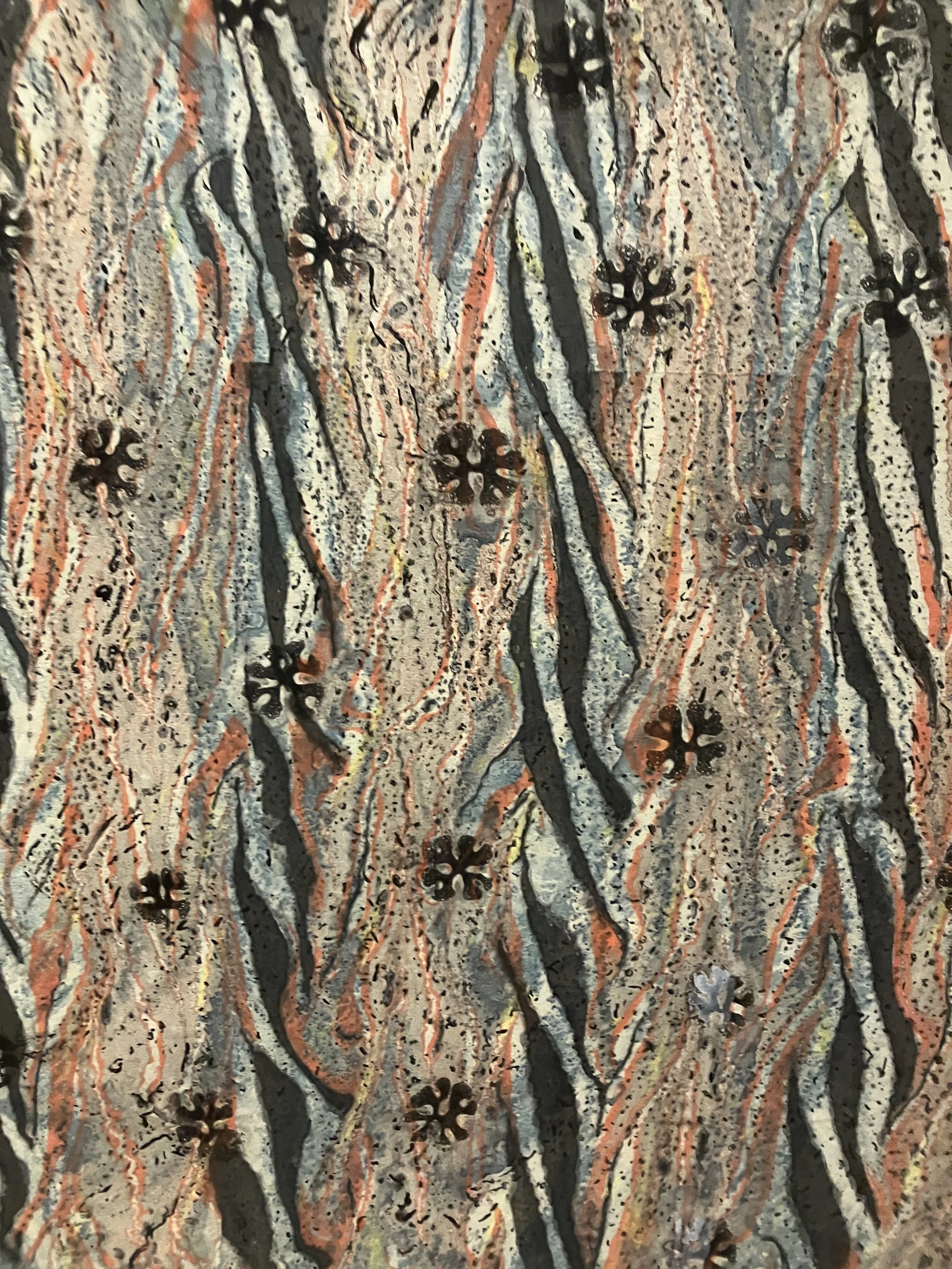
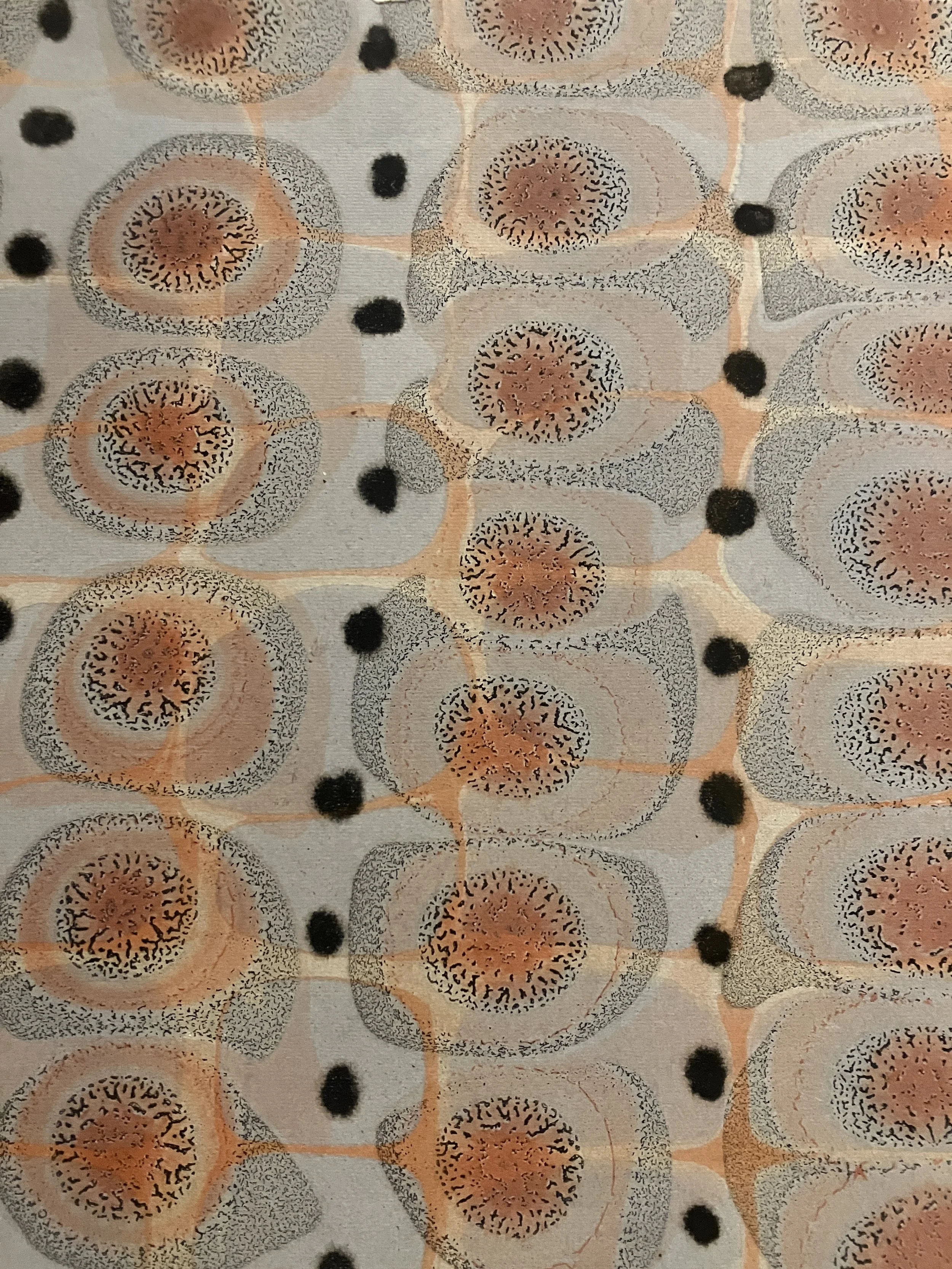
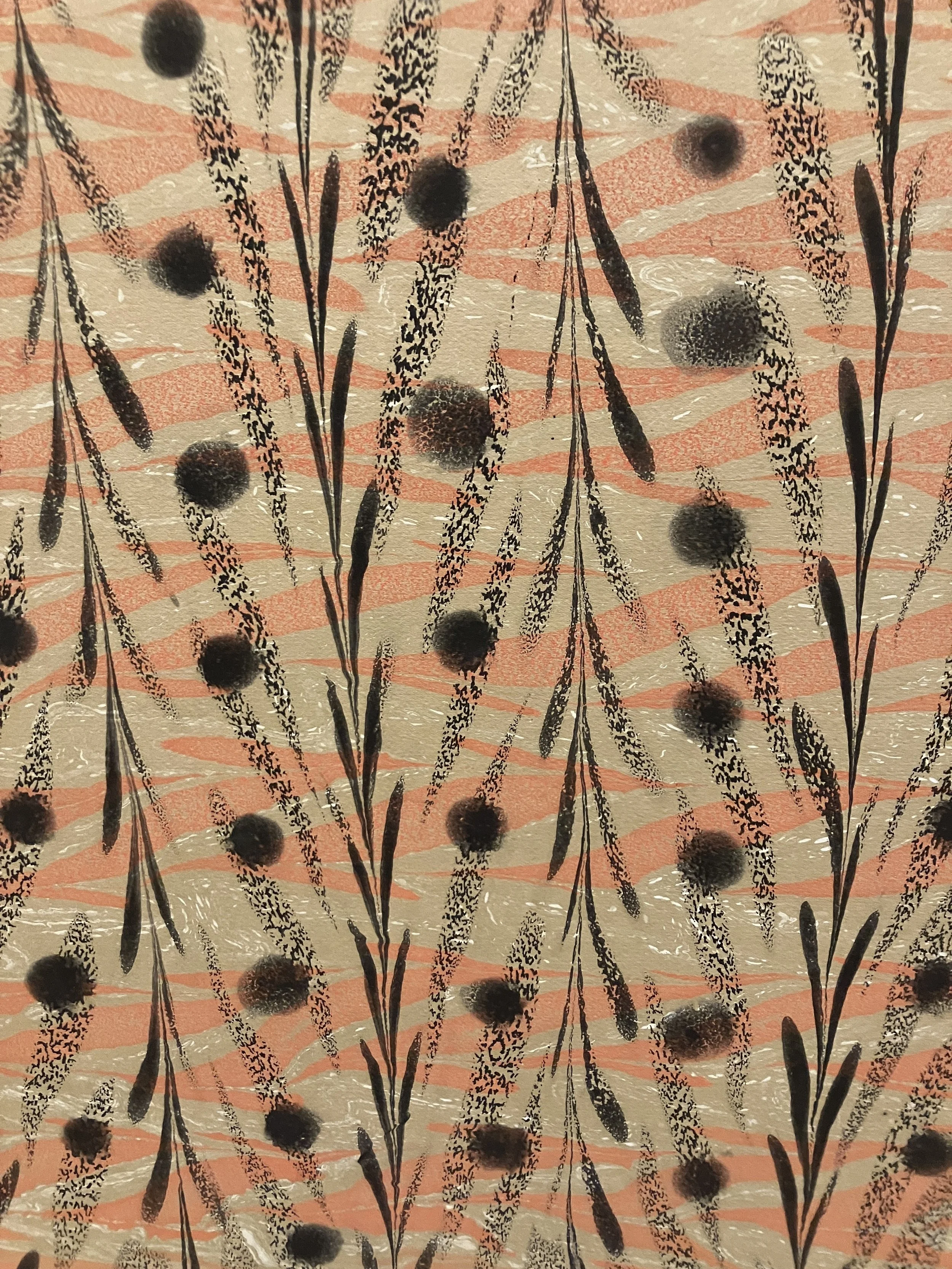
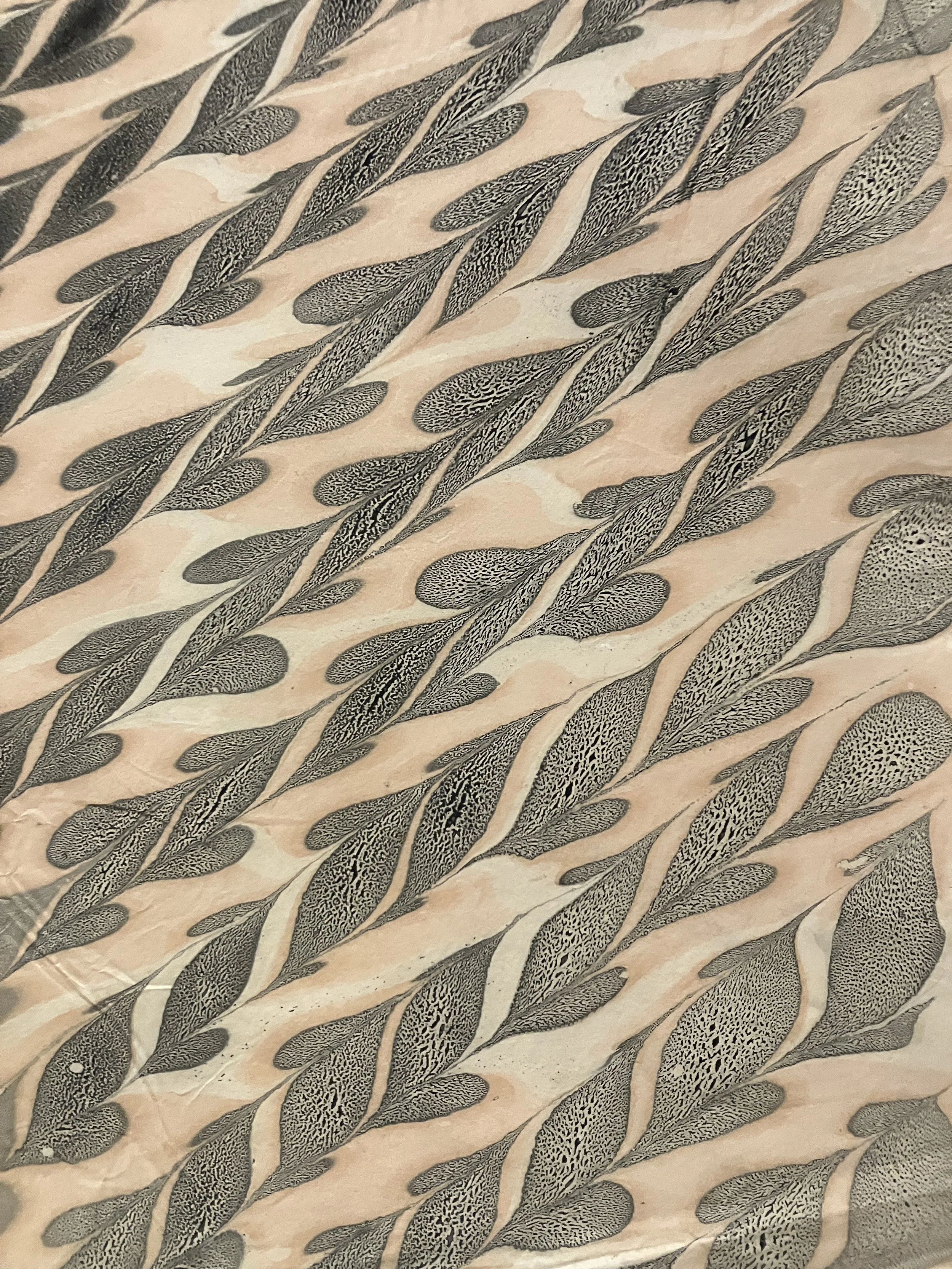
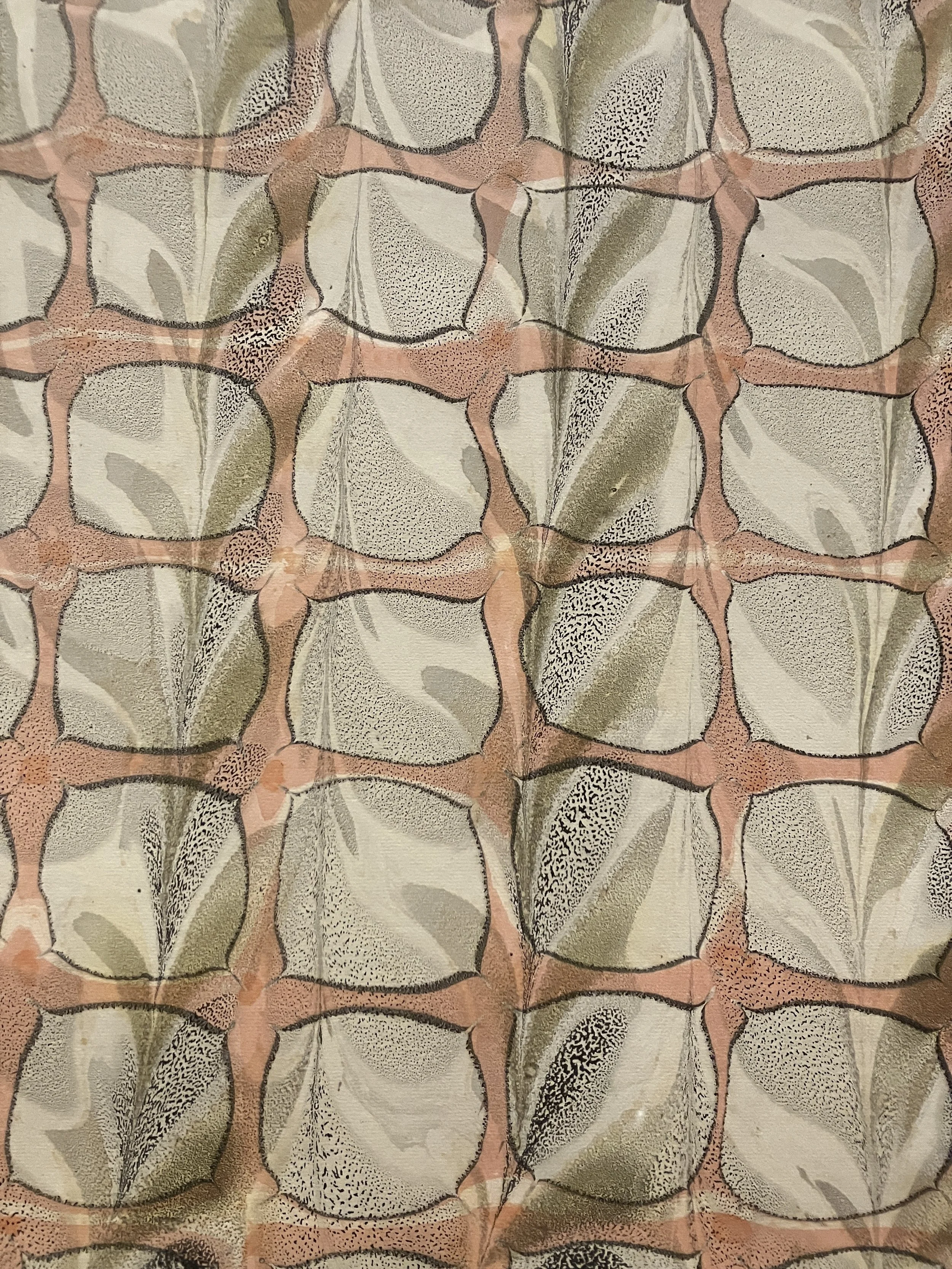
Fast forward three months and I had the most wonderful time at a beginners marbling course run by Lucy McGrath of Marmor Paperie. She combined some history and historic examples of the marbling craft with the basics of how to prep materials, produce patterns, play with colours, and understand your mistakes.
Marbling is somewhere between painting and printing. The basic principle is that you create a pattern with ink or paint and then transfer it onto paper. It has a story of global travel, starting in Japan as early as the twelfth century simply with ink on water. Travelling down the Silk Road, the technique arrived in Turkey a century or two later, where a thickening agent was added to the water, and a greater variety of colour. Trade again, likely through Venice - the home of beautiful paper - brought marbling to Europe and popularity in Germany and France. With its expert practitioners keen on secrecy, a description of the marbling craft wasn’t published until 1853. Many of the techniques and tools remain largely unchanged. You still need to prepare your pigments, and your size to thicken the water, prep and dry your papers, drop paint onto your prepared ‘bath’, create your pattern with combs, lay the paper onto the surface, wash it off, and dry it.
Luckily secrecy no longer abounds. We learnt all of these on the beginners day, and I’m aided in remembering by Lucy’s book. I was fascinated by how combining different colours, and the weights of their pigments, made the paints interact on the surface of the bath, and brought out different intensities. Perhaps unsurprisingly, I was also drawn to the ‘mistakes’: the bubbles, the lines where I moved the paper slightly, the faded effect where I laid the wrong side down, the ghost print from the paint left after a first ‘pull’.
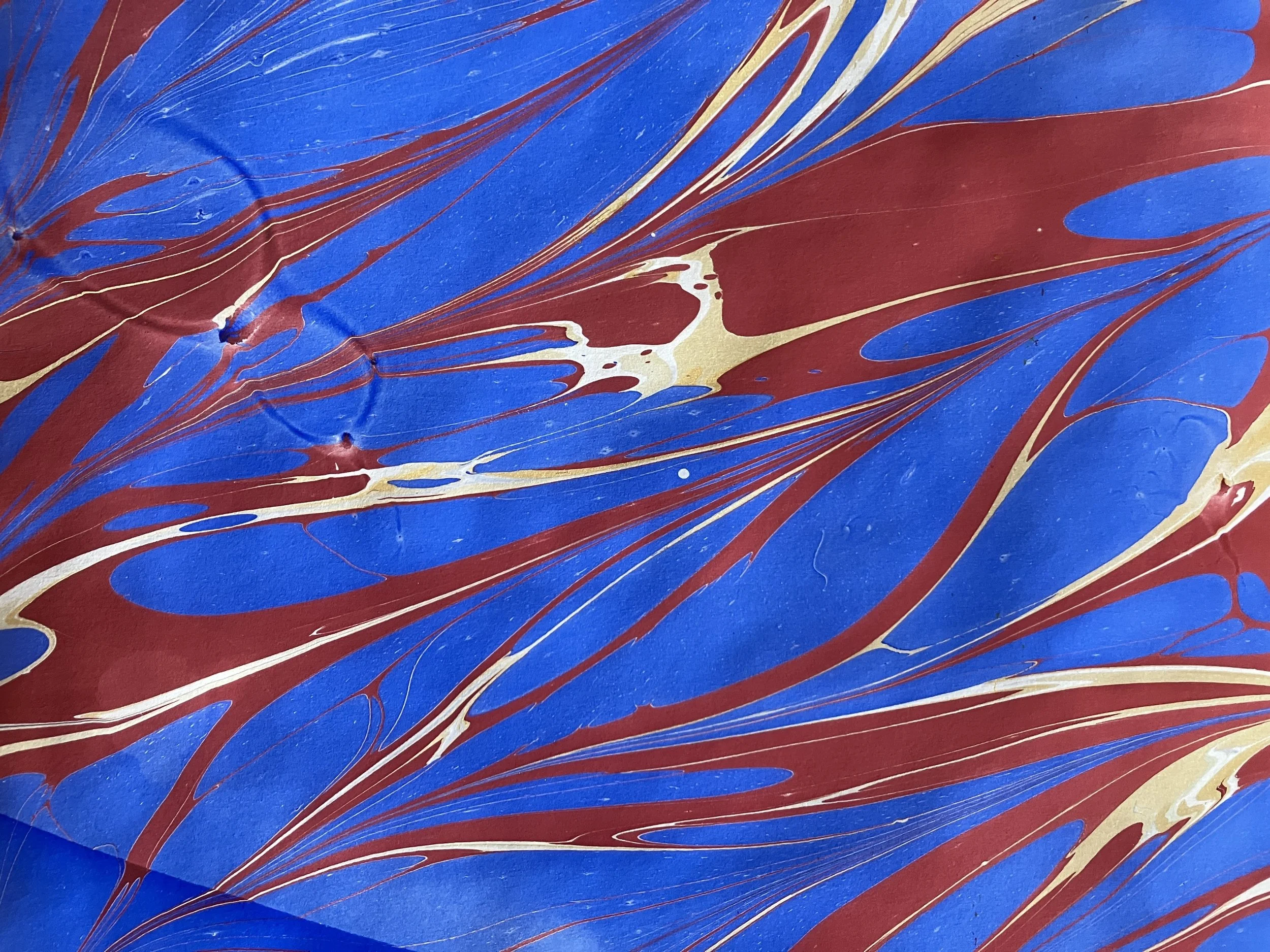
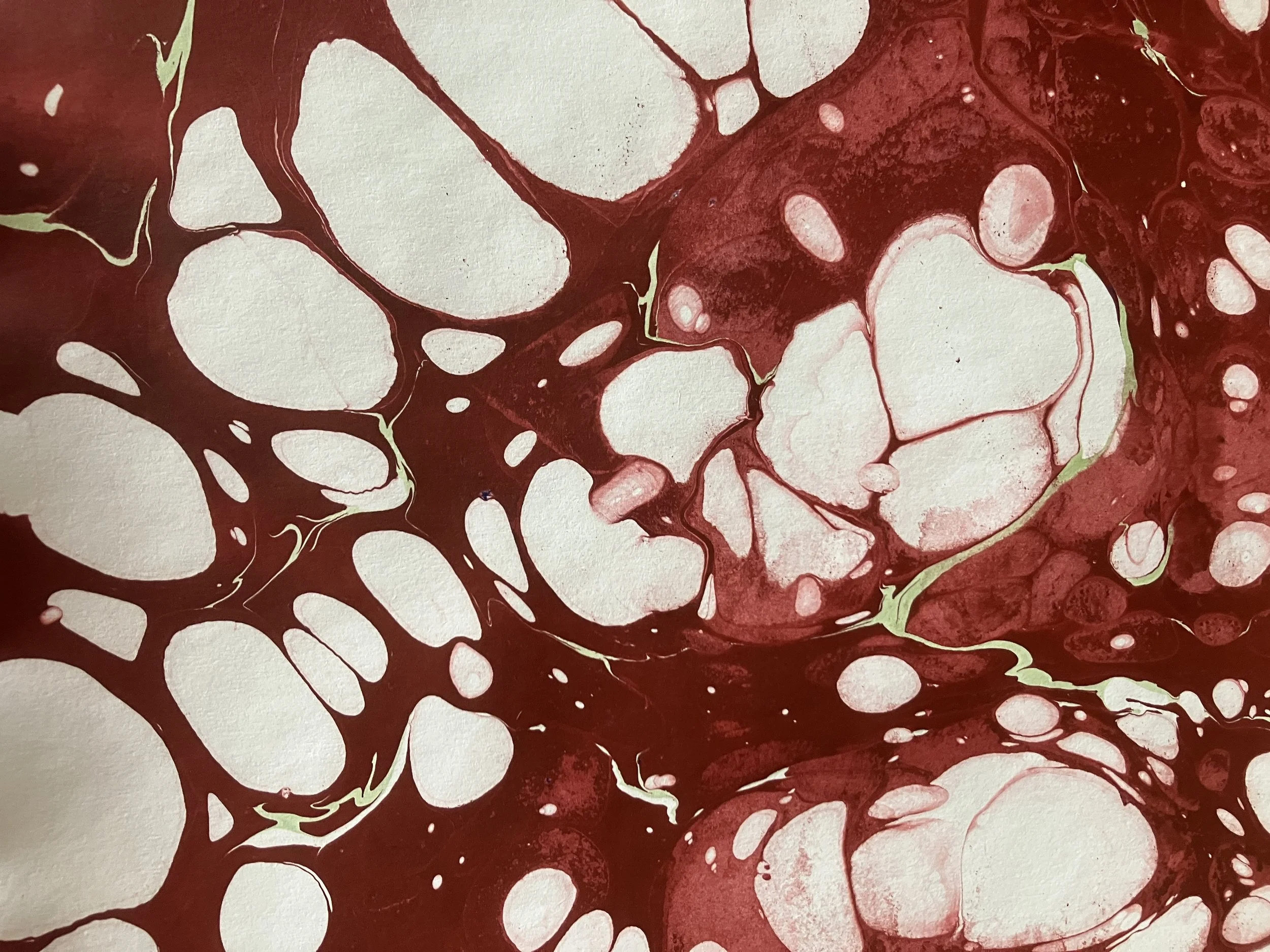
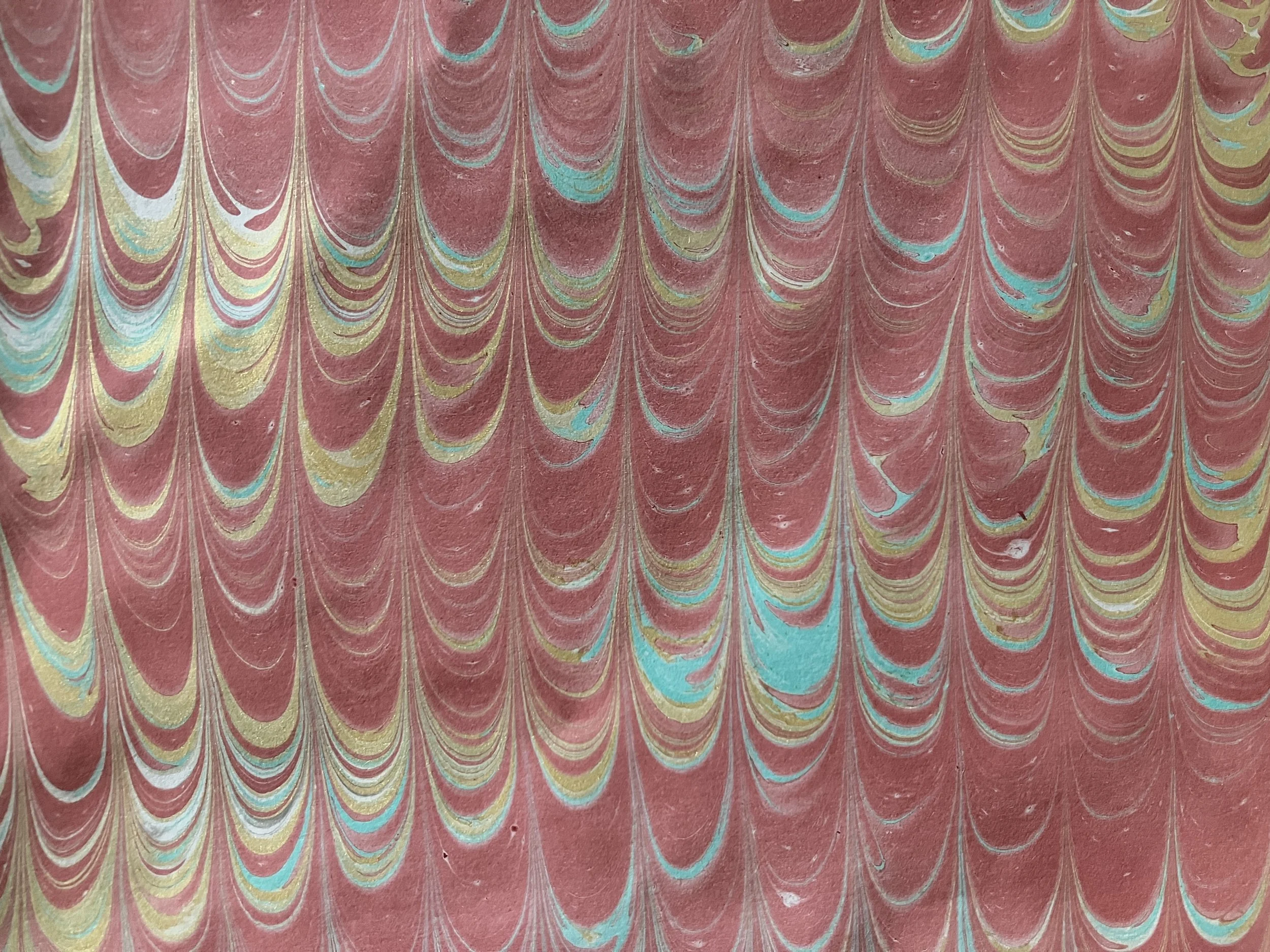
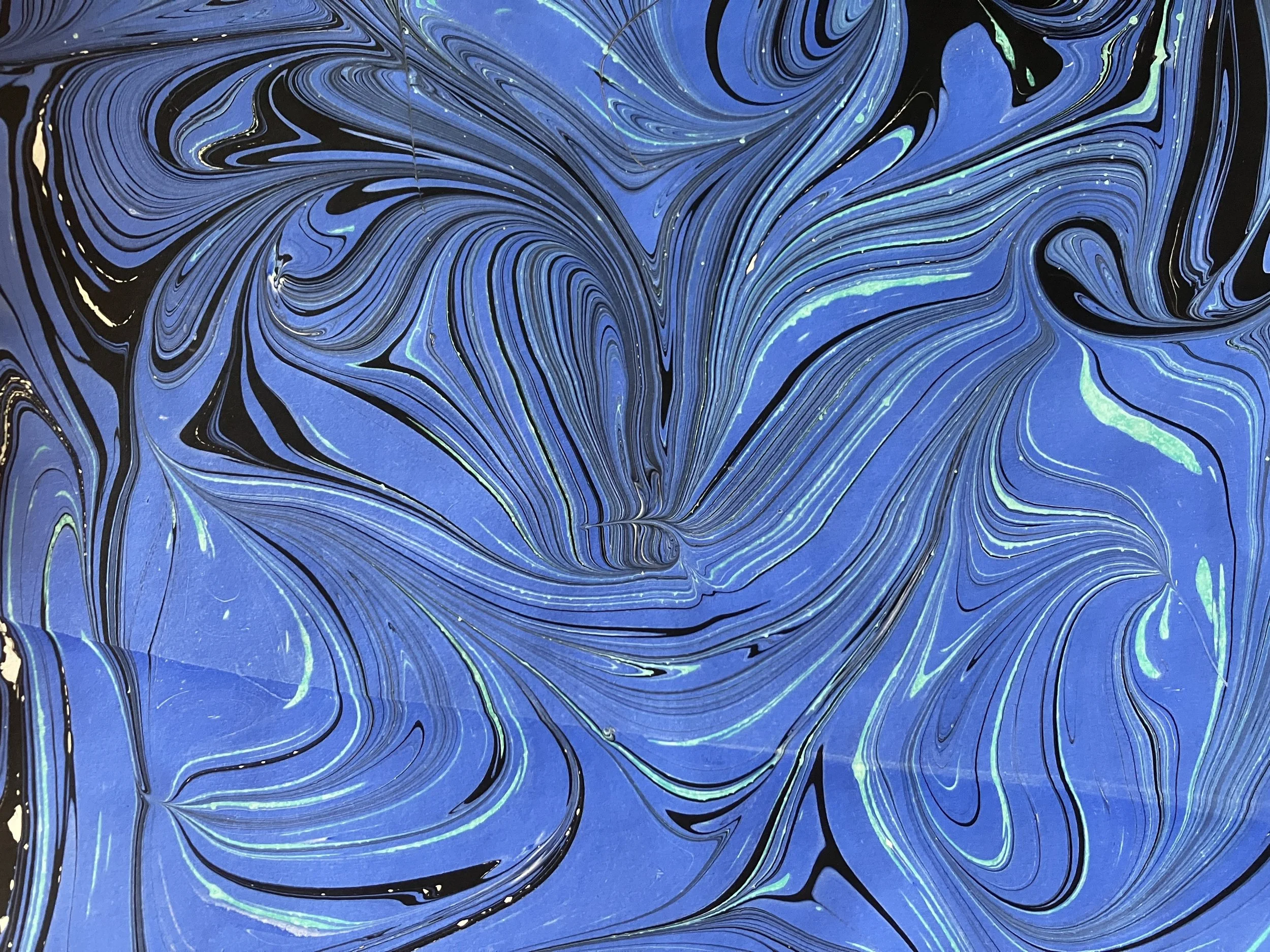
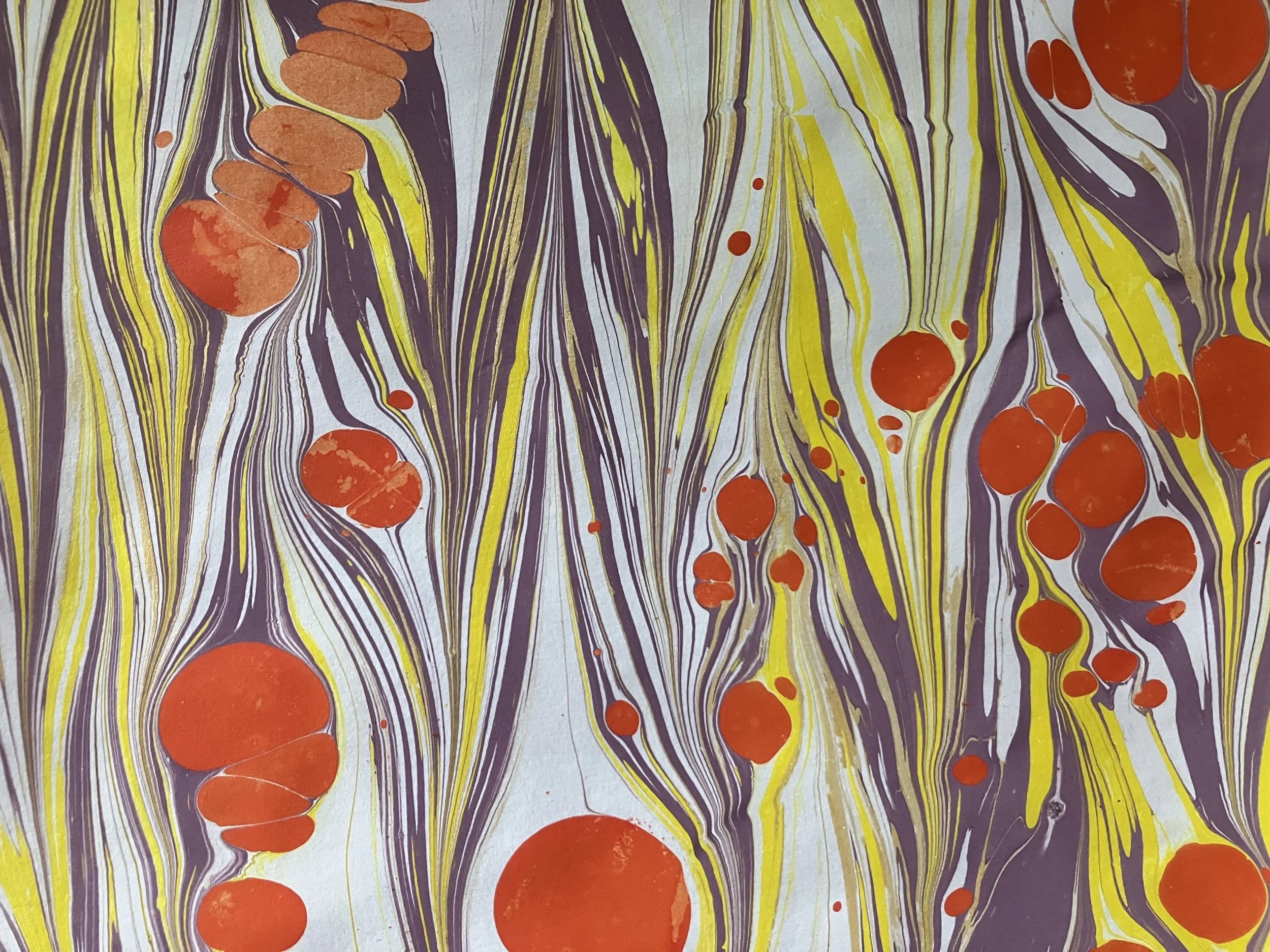
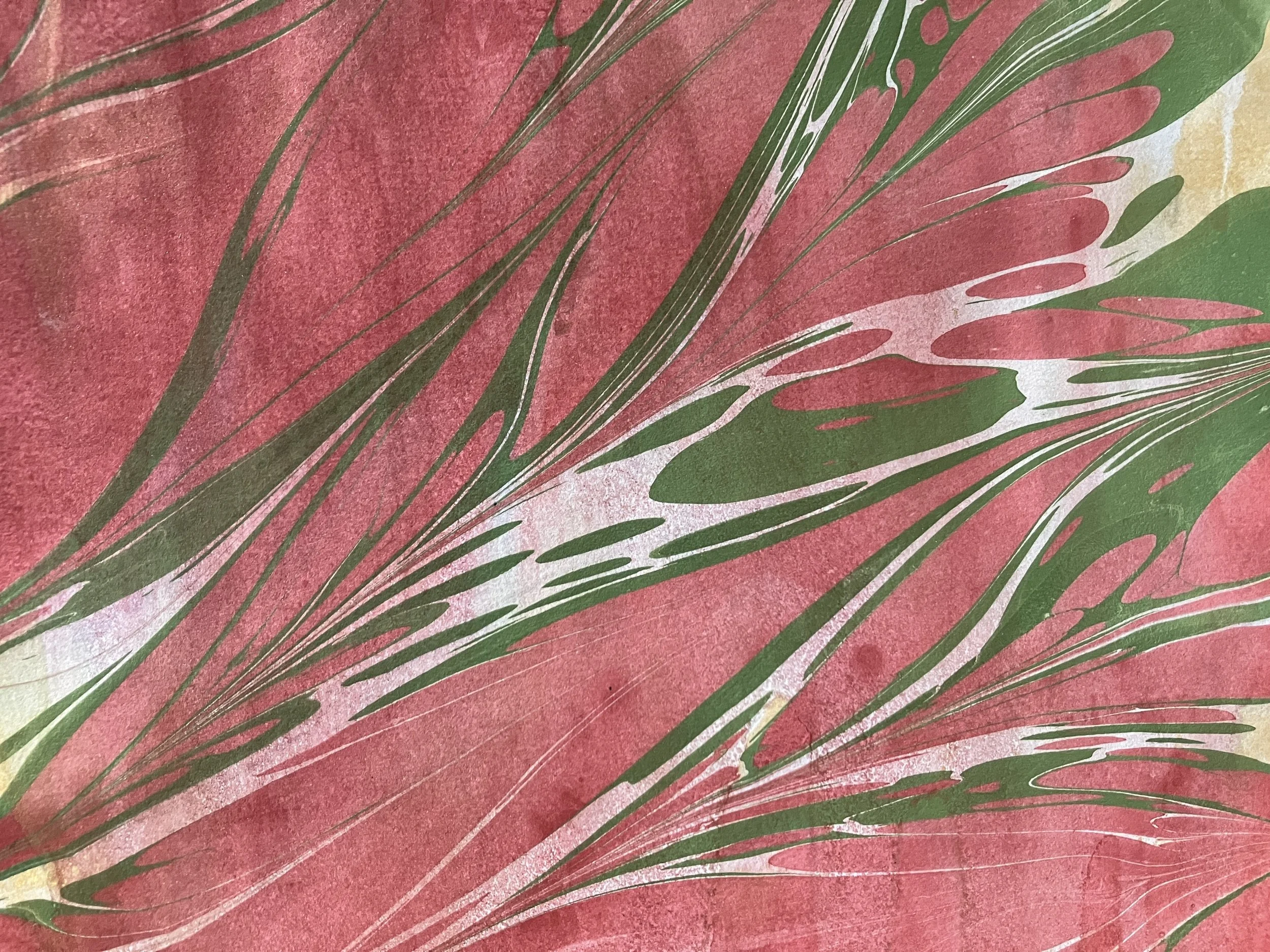
Thoroughly hooked, I went back for more in February this year, moving onto the intermediate class. Here we learnt how to mix our own paints, and really think about how to balance our colours so that the pigments interacted equally and well. It really made you think about how to construct a pattern and the order in which to add colours and draw lines through the surface. We learnt different classic patterns, starting from the basic stone made by flicking, adding a swirl with a stick, and building to use combs to make a git-gel, feather, nonpareil, or my favourite cockerell. We also learnt more about how to play with the paper, moving it on the surface to create a wave. I found I quickly wanted to start playing with colours and movements to see what would happen, rather than following the rules, and again was rather drawn to the afterthoughts and mistakes.
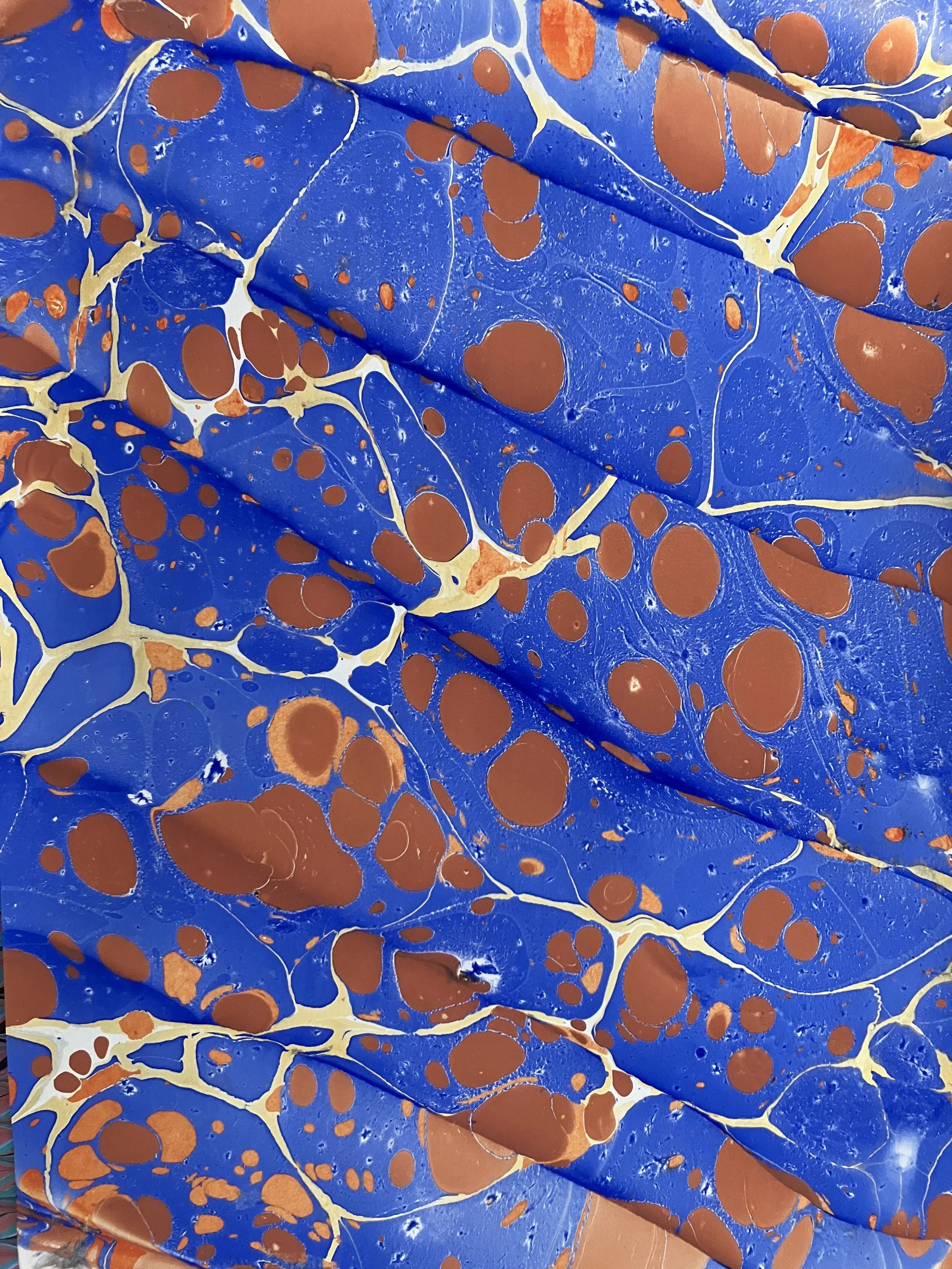
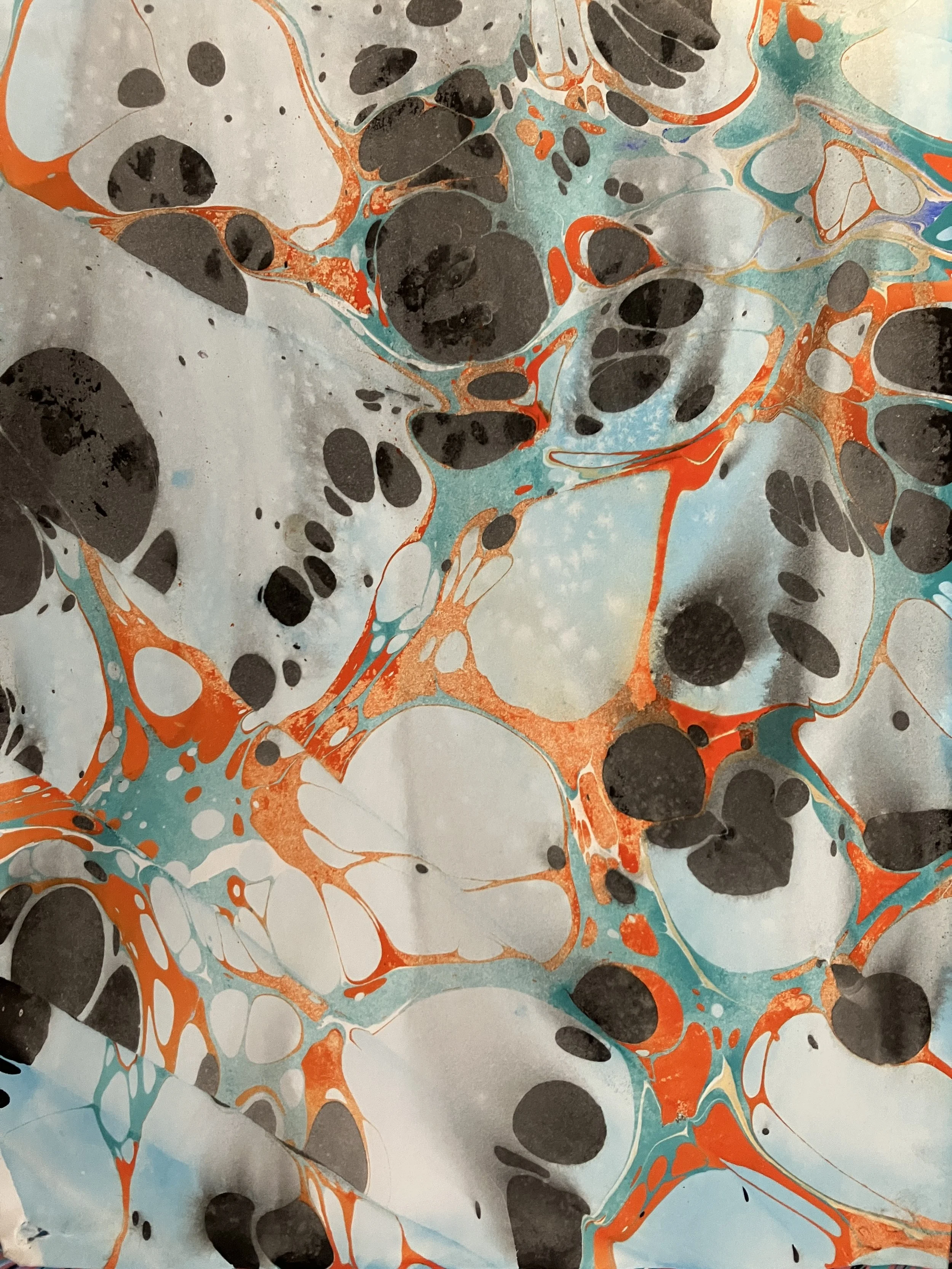
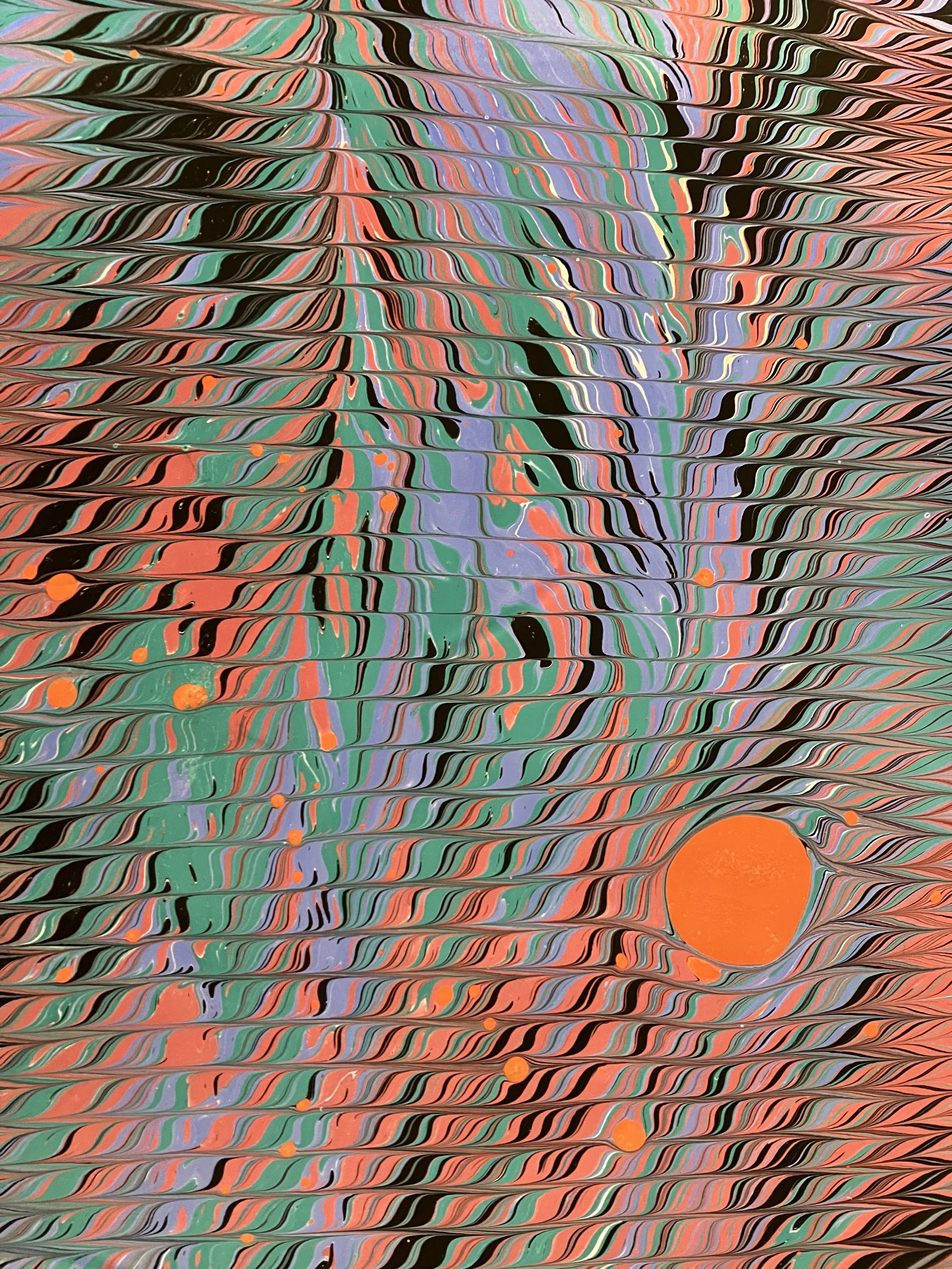
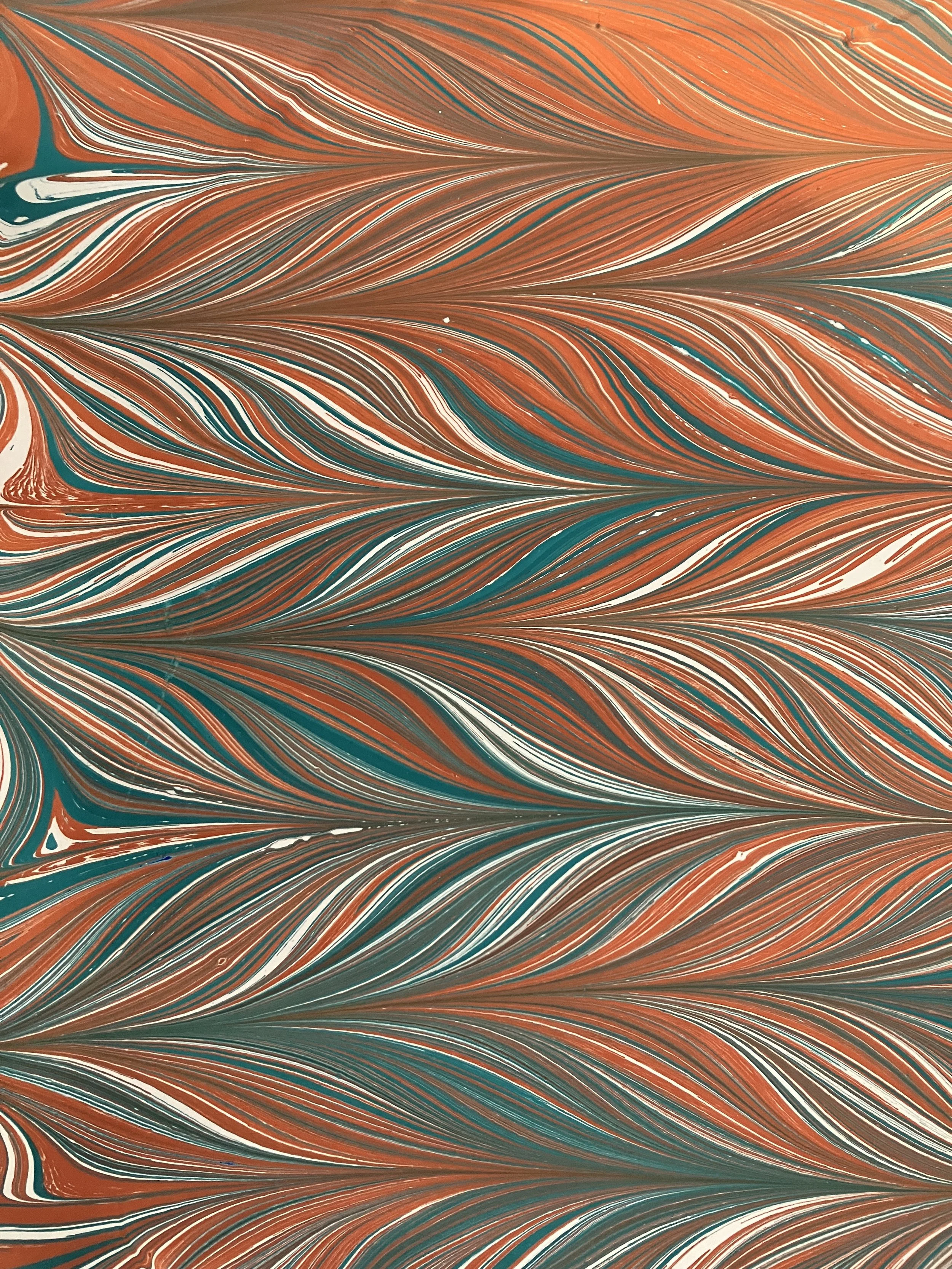
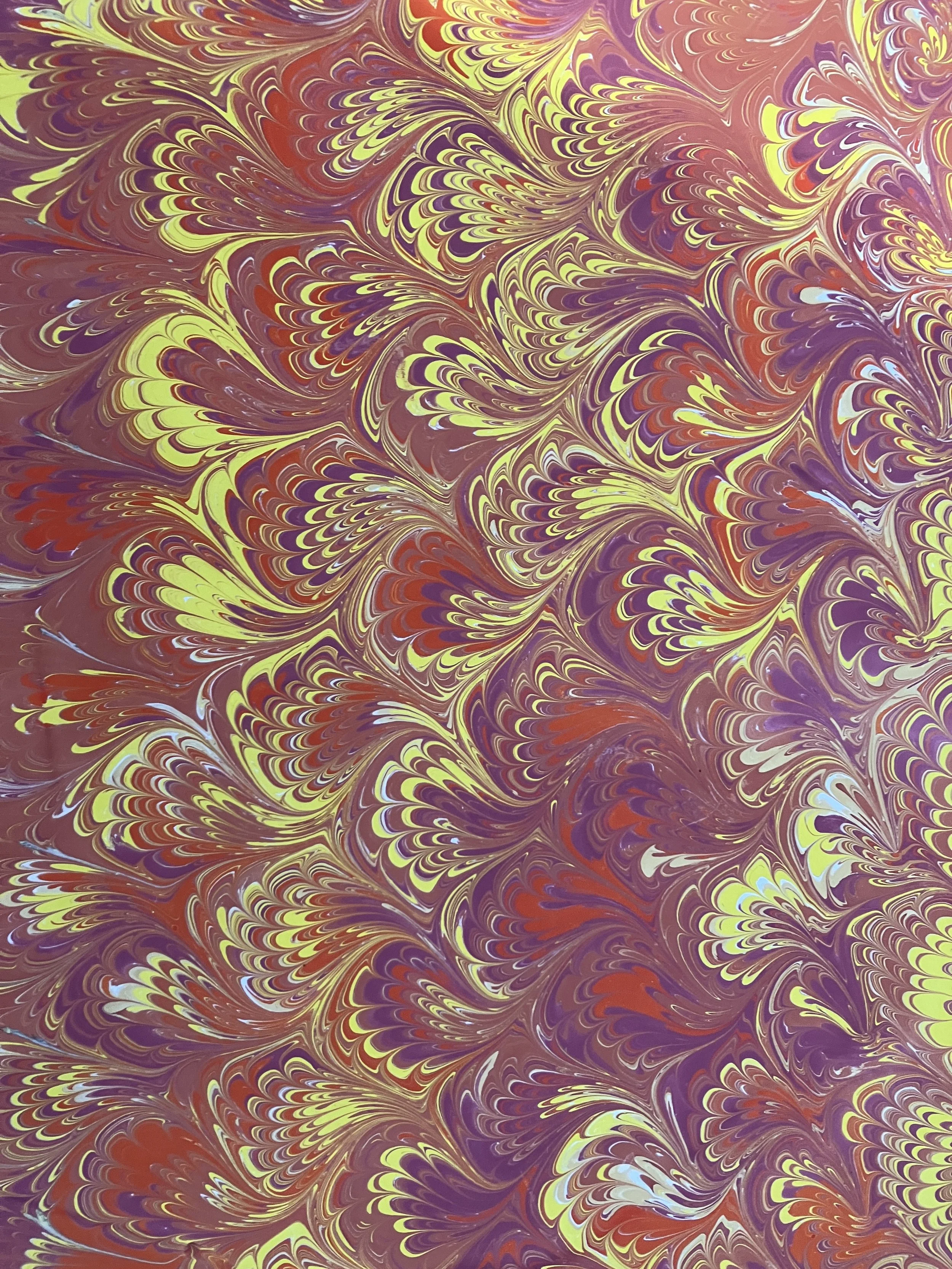
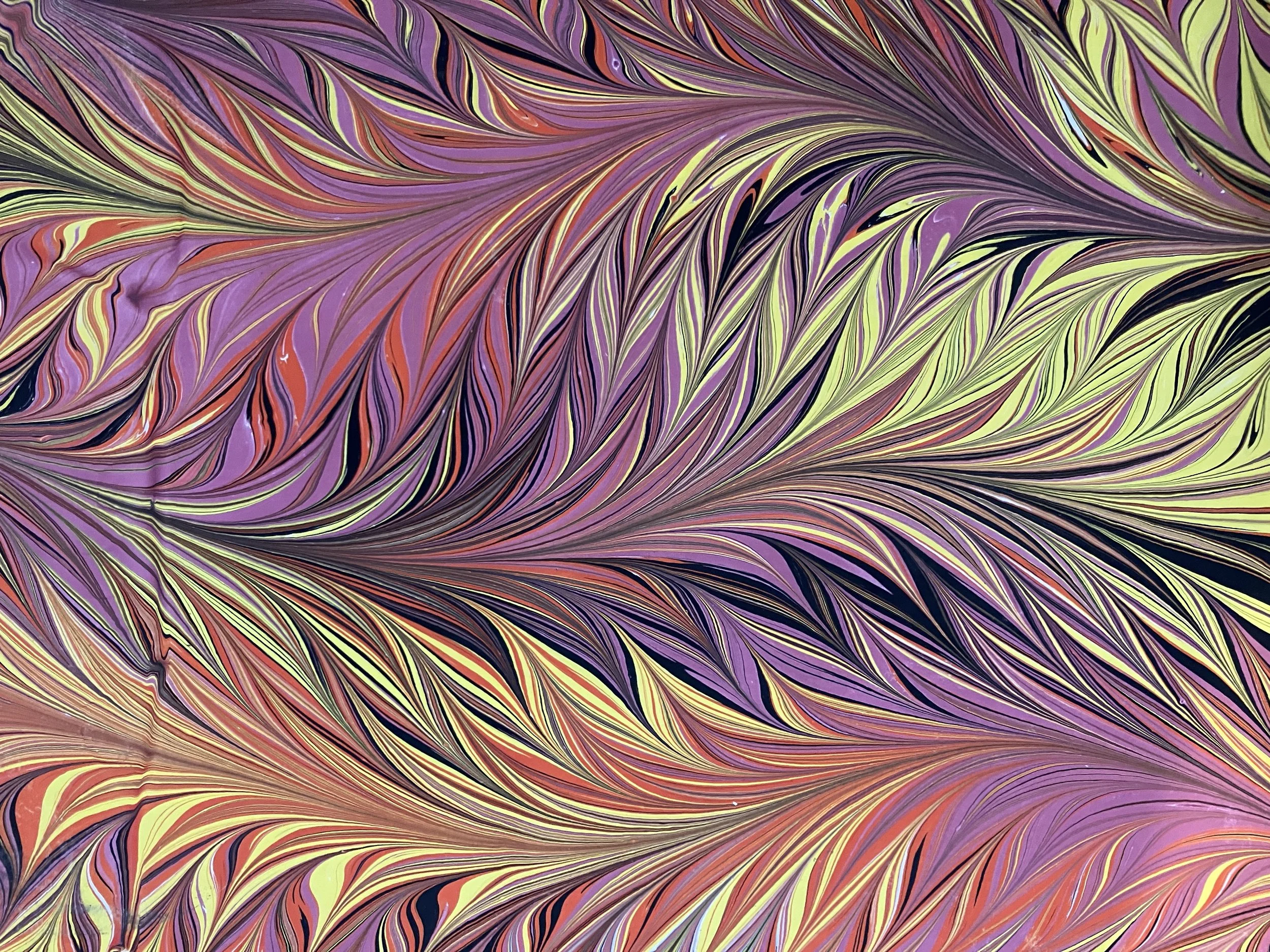
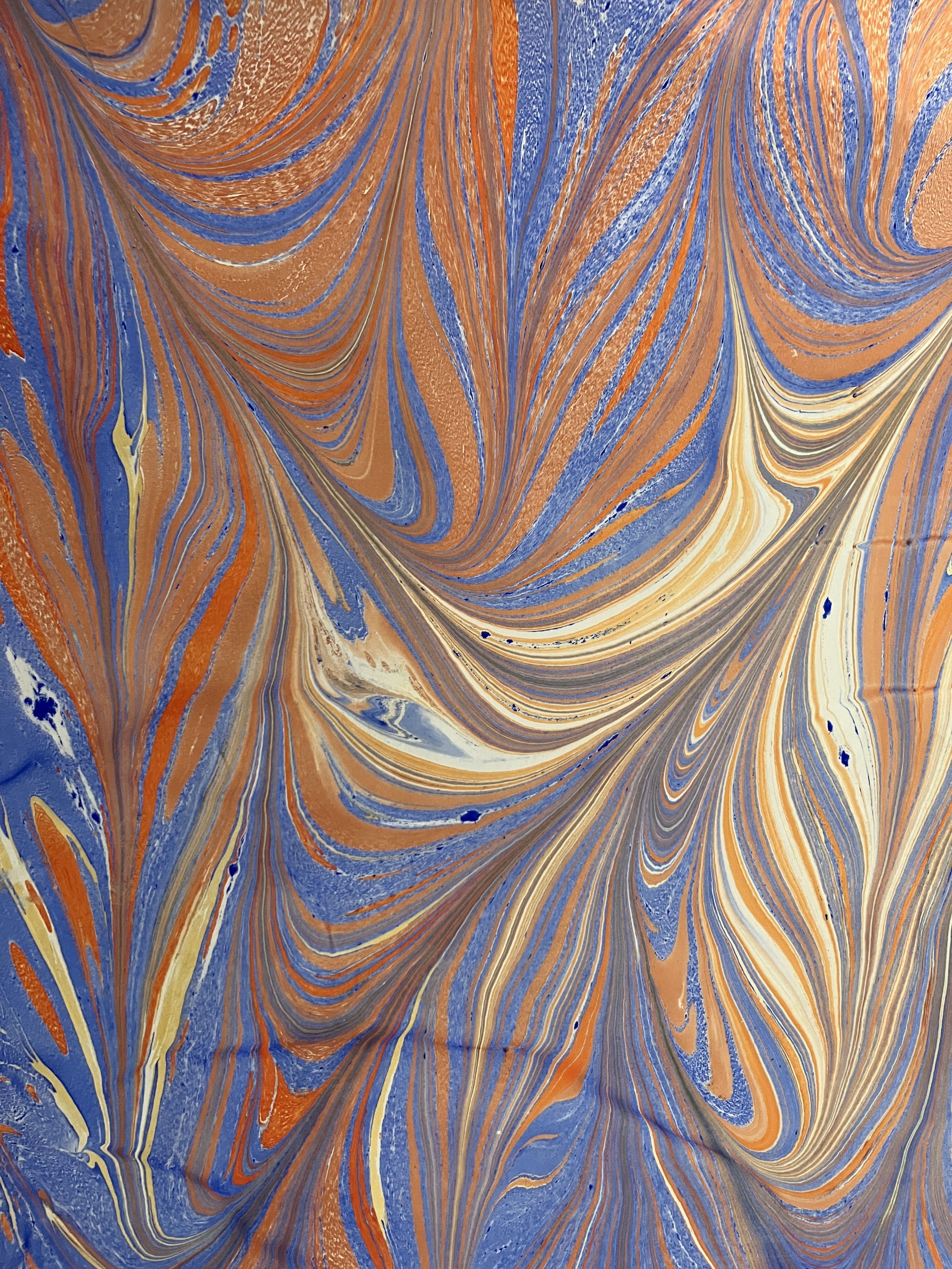
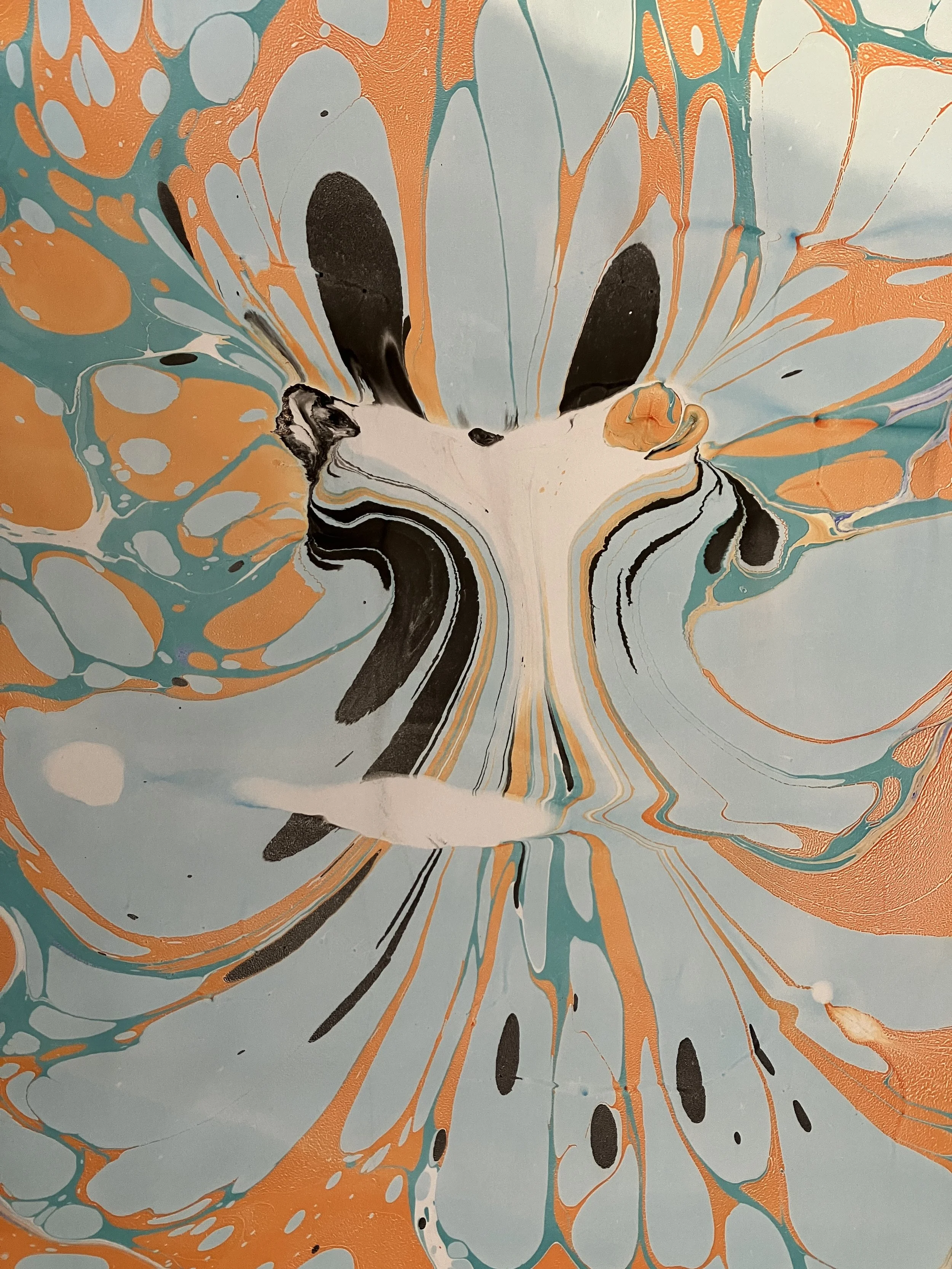
Having now tried my hand at marbling, I see even more how extraordinary Garwood’s are. The lightness, but also richness of her colours and patterns seems unique and even more compelling. She completely deserves to step out of Ravilious’s shadow for this work alone; as does marbling from better-known art forms.